

Cumming Junk Removal Services
Schedule now and watch your property transform with same-day pickup and stress-free hauling!
Get a Free QuoteExpert Junk Removal Solutions for Cumming's, GA Diverse Property Needs
Tailored Junk Removal for Every Season and Property in Cumming, GA
Cumming’s unique blend of neighborhoods and natural landscapes creates distinct junk removal needs throughout the year. In winter, residents often require post-storm cleanup and disposal of salt-damaged outdoor items or outdated snow equipment. Spring brings renovation debris, especially in sought-after communities like Windermere, Vickery, and Chattahoochee River Club. Summer sees yard waste pile up near local parks such as Sawnee Mountain Preserve and Mary Alice Park, while fall demands leaf and branch removal in tree-lined areas like Polo Fields and established subdivisions. Year-round, we assist with basement flooding cleanouts near Big Creek, help growing families declutter, and manage estate cleanouts with care and efficiency.
Commercial clients in Cumming also benefit from our expertise, with regular hauling services for retail corridors, business districts, and office parks. We handle seasonal business needs such as inventory disposal, equipment upgrades, and fixture removal, ensuring minimal disruption to daily operations. Our commitment to responsible disposal supports community cleanliness and aligns with local environmental programs. For more information on local resources and waste management initiatives, visit the Cumming Official Website.
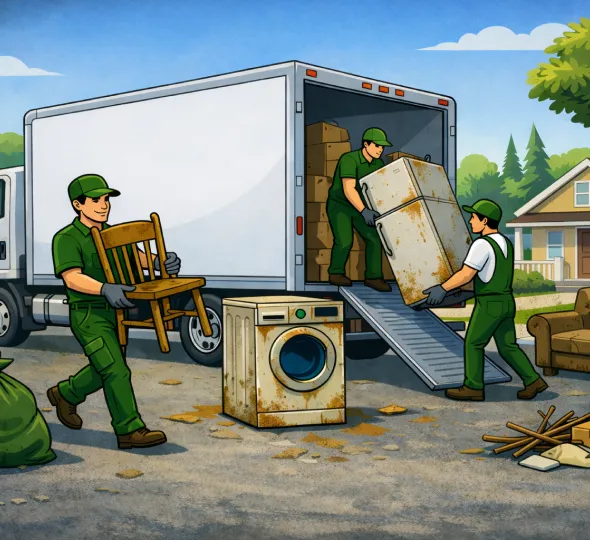
Our Cumming Residential & Commercial Junk Removal Services
Cumming Specialty & Other Junk Removal Services
Why Choose Cumming Junk Removal Services
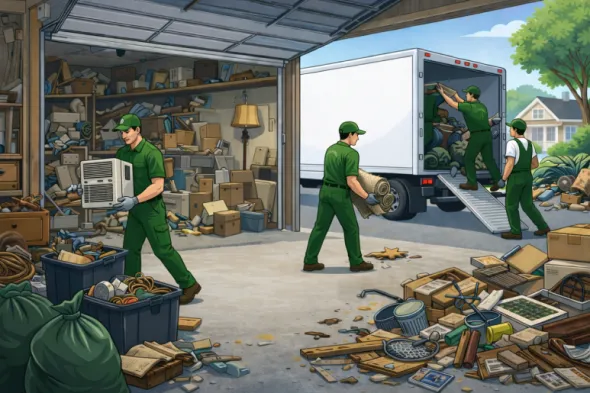

Comprehensive Junk Removal Expertise
-
Competitive Pricing
-
Professional and Courteous Team
-
Satisfaction Guarantee
-
Personalized Service
-
Eco-Friendly Disposal Solutions
-
Fast and Reliable Scheduling
Coordinating with Cumming's Department of Public Works for Bulk Waste & Special Items
Cumming operates within Forsyth County's broader solid waste management framework, with the City of Cumming Streets Department overseeing yard debris collection, right-of-way maintenance, and public facility upkeep. Forsyth County coordinates residential solid waste collection through contracted haulers, and residents must arrange service directly with licensed private providers. The city does not operate a municipal transfer station; however, Forsyth County residents can access disposal facilities managed by the county and private operators. Contact the Cumming Streets Department to confirm current yard debris collection schedules and accepted materials.
Cumming Streets Department
100 Main Street, Cumming, GA 30040
Phone: (770) 781-2020
Official Website: Cumming Streets Department
- Yard debris collection is coordinated through the Streets Department on a scheduled basis
- Residential solid waste pickup requires a contract with a licensed private hauler
- Bulky items such as furniture and appliances are not included in standard curbside service
- Forsyth County periodically hosts special collection events for electronics and household hazardous waste
- Residents should verify accepted materials and scheduling by contacting the Streets Department directly
Cumming Municipal Regulations & Permits for Junk Removal Services
The City of Cumming requires all waste haulers operating within city limits to maintain valid business licenses and comply with local zoning ordinances. Dumpster placement on public rights-of-way or city streets requires coordination with the Cumming Planning & Zoning department, which administers code enforcement, building permits, and development review. Right-of-way permit costs and processing times vary; applicants should contact Planning & Zoning directly for current fee schedules. Forsyth County also regulates land disturbance and tree removal under its Tree Ordinance, which applies to projects generating significant vegetation debris.
Cumming Planning & Zoning Department
100 Main Street, Cumming, GA 30040
Phone: (770) 781-2020
Official Website: Cumming Planning & Zoning
- Business licenses for waste haulers are required before operating within Cumming city limits
- Dumpster placement on public streets or sidewalks requires a right-of-way permit
- Code enforcement officers monitor compliance with zoning and property maintenance standards
- Projects involving tree removal on developed lots must comply with Forsyth County's tree preservation requirements
- HOA-governed communities may impose additional restrictions on dumpster placement and removal schedules
Partnering with Cumming's Environmental & Recycling Initiatives
Georgia's Environmental Protection Division oversees the state's solid waste management program, including landfill permitting, waste reduction planning, and recycling initiatives. The Georgia Solid Waste Program sets statewide goals for waste diversion and encourages local governments to adopt recycling programs. While Georgia does not currently mandate curbside recycling at the state level, Forsyth County supports recycling through drop-off centers and partnerships with private haulers. Residents and businesses in Cumming can donate reusable items to organizations such as Habitat for Humanity ReStore in Cumming and local Goodwill and Salvation Army locations.
- Georgia's EPD administers the state's solid waste trust fund and provides grants for local recycling programs
- Forsyth County operates recycling drop-off locations accepting paper, cardboard, glass, plastics, and metals
- Scrap metal recycling facilities in the greater Cumming area accept appliances, steel, aluminum, and copper
- Donation centers such as Habitat for Humanity ReStore accept furniture, building materials, and household goods
- Businesses generating large volumes of recyclable material should coordinate with licensed commercial haulers
Hazardous Waste Restrictions & Proper Disposal Channels in Cumming
Federal law under the Resource Conservation and Recovery Act (RCRA) governs the management and disposal of hazardous waste, including materials commonly found during residential and commercial cleanouts. Cumming residents must not place hazardous materials—such as paint, solvents, pesticides, batteries, and fluorescent lamps—in standard waste containers. The EPA Universal Waste Rule provides streamlined handling requirements for batteries, mercury-containing devices, and certain pesticides. Forsyth County periodically hosts household hazardous waste collection events; residents should contact Forsyth County Environmental Health for upcoming dates and accepted materials.
Forsyth County Environmental Health
1092 Tribble Gap Road, Cumming, GA 30040
Phone: (770) 781-6932
Official Website: Forsyth County Environmental Health
- Latex and oil-based paints, stains, and varnishes require disposal through hazardous waste collection events
- Lead-acid batteries from vehicles must be returned to retailers or recycling facilities, not placed in landfills
- Fluorescent tubes and compact fluorescent lamps contain mercury and fall under EPA universal waste regulations
- Pesticides, herbicides, and pool chemicals require segregated handling and cannot enter municipal waste streams
- Forsyth County collection events accept household hazardous waste free of charge for county residents
Appliance Removal & Refrigerant Recovery Requirements in Cumming
Federal Clean Air Act Section 608 regulations require EPA-certified technicians to recover refrigerants from appliances—including refrigerators, freezers, air conditioning units, and dehumidifiers—before disposal or recycling. Improper venting of refrigerants carries federal penalties of up to $44,539 per day per violation. In Cumming, appliance removal operations must ensure refrigerant recovery documentation accompanies each unit delivered to a disposal or recycling facility. The EPA Region 4 Southeast office in Atlanta, GA provides compliance guidance for businesses handling refrigerant-containing equipment in Georgia.
- Refrigerators, freezers, window AC units, and dehumidifiers all contain regulated refrigerants
- Only EPA Section 608-certified technicians may legally recover refrigerants before appliance disposal
- Documentation of refrigerant recovery must be maintained for a minimum of three years
- White goods (washers, dryers, stoves) without refrigerants can be recycled at scrap metal facilities
- Disposal facilities in Forsyth County require proof of refrigerant recovery before accepting cooling appliances
Seasonal Waste Patterns & Weather Considerations in Cumming
Cumming's humid subtropical climate produces distinct seasonal waste patterns that affect junk removal logistics. Summer temperatures regularly exceed 90°F, accelerating odor and pest concerns for organic waste and upholstered items left curbside. Spring and fall generate significant yard debris from Cumming's mature tree canopy, and severe thunderstorms between April and September can produce storm debris requiring rapid removal. Winter freezes, though infrequent, can create icy conditions on sloped driveways common in Forsyth County's hilly terrain. The Forsyth County Engineering Department manages stormwater infrastructure and can provide guidance on debris removal near drainage easements.
- Spring cleaning season (March–May) generates peak demand for residential cleanouts and furniture removal
- Summer heat requires prompt removal of mattresses, upholstered furniture, and food-contaminated items
- Fall leaf season produces heavy yard debris volumes, particularly in established neighborhoods with hardwood canopy
- Severe weather events may generate emergency debris requiring coordination with Forsyth County emergency services
- Sloped properties and unpaved driveways in rural areas of Cumming may limit truck access during wet conditions
Construction Debris Sorting & Material Separation Requirements in Cumming
Renovation and demolition projects in Cumming generate construction and demolition (C&D) debris subject to Georgia EPD regulations and local building codes. The Forsyth County Planning & Community Development department issues building permits and conducts inspections for projects that produce significant debris volumes. Homes built before 1978 may contain lead-based paint, requiring compliance with the EPA's Lead Renovation, Repair, and Painting (RRP) Rule during disturbance activities. C&D materials such as clean wood, concrete, metal, and drywall should be separated for recycling where facilities exist in the greater Forsyth County area.
Forsyth County Planning & Community Development
110 E. Main Street, Suite 100, Cumming, GA 30040
Phone: (770) 781-2115
Official Website: Forsyth County Planning & Community Development
- Building permits are required for demolition and major renovation projects generating C&D debris
- Clean concrete, brick, and asphalt can be recycled at aggregate recycling facilities in the Forsyth County area
- Scrap metal from renovation projects (copper pipe, steel framing, aluminum) has recycling value at local yards
- Asbestos-containing materials in pre-1978 structures require licensed abatement before demolition
- Mixed C&D loads delivered to landfills incur higher tipping fees than source-separated recyclable materials
What Neighborhoods Do We Serve Throughout Cumming, GA?
Downtown Cumming: Historic commercial and civic core along Main Street with on-street parking constraints; coordination with city permits is often required for curbside dumpster placement near the Cumming Town Square.
Castleberry Hills: Established residential subdivision with wide streets and single-family homes; well-suited for large furniture, appliance, and garage cleanout projects.
Vickery Village: Mixed-use planned community featuring townhomes and retail spaces; narrow interior streets and shared parking areas require advance scheduling for removal vehicles.
The Collection at Forsyth: High-density commercial and residential development along GA-400; building management coordination is necessary for tenant turnover and renovation debris removal.
Pilgrim Mill Estates: Lakefront properties near Lake Lanier with sloped lots and gravel driveways; truck access may be limited during wet weather conditions.
Sharon Estates: Mature suburban neighborhood with large lots and detached garages; common demand for estate cleanouts and yard debris removal from older properties.
Windermere: Family-oriented subdivision with cul-de-sac layouts; seasonal cleanout demand peaks during spring and back-to-school periods.
Cumming's Role in Forsyth County Solid Waste Management Planning
Cumming serves as the county seat of Forsyth County, one of Georgia's fastest-growing counties, and plays a central role in regional solid waste planning. Forsyth County's Solid Waste Management Plan, required under Georgia's Comprehensive Solid Waste Management Act (O.C.G.A. § 12-8-31.1), establishes waste reduction targets and identifies disposal capacity needs for the next ten years. The Georgia Environmental Protection Division reviews and approves county solid waste plans and issues permits for landfills and transfer stations operating within the region. Rapid population growth in Forsyth County increases pressure on existing disposal infrastructure and underscores the importance of waste diversion.
- Georgia law requires each county to maintain a ten-year solid waste management plan approved by the EPD
- Forsyth County's population growth drives increasing demand for residential and commercial waste services
- Regional landfills serving Cumming include facilities in neighboring Hall, Dawson, and Cherokee counties
- The Georgia EPD Land Protection Branch regulates all solid waste handling facilities statewide
- Interstate transport of solid waste is subject to federal Commerce Clause protections and state reciprocity agreements